For millions across the UK, smart meters have calmly evolved into part of daily vitality, sitting beside the boiler or tucked beneath the stairs, flashing without much fuss. Most individuals installed one either because their energy supplier requested it or because they chose to keep a close eye on their power bills. But there is one question that surprisingly few individuals think to ask until they are standing in front of an in-home display, wondering what it all signifies: how often does the thing actually talk to anyone?
It turns out the answer is rather more interesting than most people expect.
The Basics: What a Smart Meter Actually Does
A smart meter is, at its core, as much a communication appliance as a measuring one. It records how much gas and electricity a home uses, but unlike a retro dial meter, it does not sit there in silence waiting for an individual to come along with a torch and a notepad. It sends that information automatically to the energy supplier, to the national data network, and often to the small in-home display sitting on the kitchen worktop.
The frequency with which it does all of this depends on several factors: the type of meter installed, the supplier's systems, and what the data is actually being used for.
Half-Hourly Readings: The Default Standard
Most smart meters installed in British residences today are set to transmit consumption data to the energy supplier every 30 minutes. This is the enterprise benchmark beneath the Smart Metering Implementation Programme (SMIP), and it gives energy firms a genuinely precise view of when and how a household utilizes power throughout the day.
This half-hourly reporting is what makes time-of-use tariffs feasible, those newer deals where electricity commands a minor price during off-peak hours and a major price during the evening rush. Without granular data coming in automatically, suppliers simply would not be able to offer them.
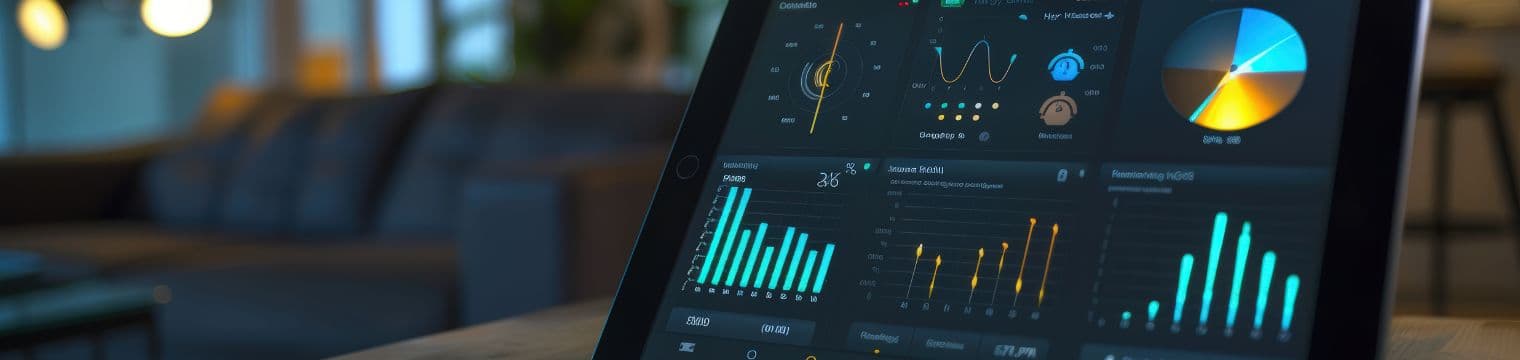
For the householder, this level of detail is likewise what powers real-time feedback on the in-home display. When someone flicks the kettle on and watches the numbers climb, that near-instant reaction is made feasible by the meter's regular local updates, though it is worth noting the display itself often refreshes every few seconds, utilizing data kept locally, distinct from what gets sent to the supplier.
How Often Do Smart Meters Send Readings, And Does It Change?
One of the most common origins of chaos is understanding the contrast between how often the meter records data and how often smart meters send readings to the energy supplier. These are not consistently the same thing.
A SMETS2 meter, the newer generation now being rolled out across Great Britain, is adept at sending half-hourly data as a benchmark. Nevertheless, some older SMETS1 meters, notably those installed in the earlier years of the rollout, may simply transmit everyday sums or even monthly outlines relying on the supplier's configuration.
It is likewise worth knowing that households can, in numerous cases, adjust how frequently their data is transmitted. Some suppliers entitle consumers to opt for daily readings rather than half-hourly ones, which some individuals choose for privacy reasons. Others may discover that switching tariffs or moving home triggers a shift in how often smart meters send readings until the account is properly set up on the new system.
The national communications network utilized by smart meters, operated by the Data Communications Company (DCC), is designed to handle this flexibility, routing data between meters and suppliers securely and reliably. In locations with poor signal, readings may sometimes be postponed, though the meter itself keeps a local record and will catch up once connectivity improves.
When to Submit Meter Reading: Is It Still Necessary?
Here is where many smart meter owners get caught out. A smart meter is supposed to eliminate the need for manual reads entirely, but that is not always the reality, particularly in the first few weeks after installation, or when switching suppliers.
Knowing when to submit meter reading figures manually is still a useful skill to have. If a family has newly switched energy companies, there is frequently a gap of several days, periodically longer, before the new supplier's systems are fully connected to the smart meter network. During this window, a manual read may be requested to ensure the outset balance is precise.
Likewise, when to submit meter reading data becomes applicable if the meter temporarily loses its network connection, if there is a billing conflict, or if the supplier's data seems uneven. Even with a functioning smart meter, keeping an occasional eye on the figures and comparing them to the bill is simply good practice.
Most energy suppliers make this specific; readings can usually be submitted through an app, the supplier's website, or by phone. And if someone is ever unsure whether their smart meter is actually displaying appropriately, the in-home display is usually the first place to check: a long delay since the last update or a steady error symbol often signals a connection issue worth reporting.
What Happens to All That Data?
Every half-hourly reading that leaves a smart meter enters a regulated data pipeline. Suppliers use it for billing, for detecting unusual consumption patterns that might indicate a fault or a vulnerability (such as an elderly customer whose usage suddenly drops off), and increasingly for grid balancing purposes.
The data is protected under strict rules set by Ofgem and the wider UK regulatory framework. Households have the right to request their own consumption data and to limit how it is shared beyond their supplier.
A Small Device Doing Quite a Lot
It is easy to take smart meters for granted. They sit quietly in utility cupboards, reporting away every thirty minutes without anyone giving them a second thought. But the infrastructure behind them, and the detail of information they collect, is genuinely impressive.
Understanding how often smart meters send readings and knowing when to submit meter reading figures manually when the situation calls for it puts any household in a far stronger position when it comes to managing energy costs. In a climate where bills remain a real pressure for many families, that knowledge is worth having.
Smart meters are not magic. But used well, they are a remarkably useful tool, one that works hardest when the people using them actually understand what it is doing behind that blinking display.